
Endometriosis is a common yet often misunderstood condition that affects millions of women worldwide. It occurs when tissue similar to the lining of the uterus grows outside the uterus, leading to inflammation, pain, and sometimes fertility challenges. Among the complications associated with this condition is endometrioma, a type of ovarian cyst linked to endometriosis.
Because these two terms are closely related, many people assume they are the same condition. However, endometriosis and endometrioma are not identical. Endometriosis refers to the broader disease process, while endometrioma is a specific manifestation of that disease.
Understanding the difference between these conditions is important for recognizing symptoms early and seeking the right medical care. In this article, we will explore what endometriosis and endometrioma are, how their symptoms differ, and how doctors diagnose them.
What Is Endometriosis?
Endometriosis is a medical condition in which tissue similar to the endometrium, the lining inside the uterus, grows in areas outside the uterus. Although this tissue is located elsewhere in the body, it still responds to hormonal changes during the menstrual cycle.
Each month, this tissue thickens and breaks down just like the uterine lining. However, because it has no way to exit the body, it can cause inflammation, scarring, and chronic pain.
Endometriosis most commonly affects women during their reproductive years, typically between ages 15 and 49.
Common Locations of Endometriosis
Endometriosis lesions can develop in several areas of the pelvic region, including:
- The ovaries
- Fallopian tubes
- Pelvic lining (peritoneum)
- Outer surface of the uterus
- Bladder
- Bowel
In rare cases, endometrial-like tissue may even appear outside the pelvic area, though this is uncommon.
What Causes Endometriosis?
The exact cause of endometriosis is not fully understood, but several theories exist.
Retrograde menstruation is the most widely accepted explanation. In this process, menstrual blood flows backward through the fallopian tubes into the pelvic cavity, carrying endometrial cells that implant outside the uterus.
Other potential factors include:
- Genetic predisposition
- Hormonal imbalances
- Immune system dysfunction
- Inflammation in the pelvic region
These factors may work together to trigger the development of the condition.
What Is Endometrioma?
An endometrioma is a type of ovarian cyst that develops when endometriosis affects the ovaries. These cysts are sometimes referred to as “chocolate cysts” because they contain thick, dark fluid made up of old blood.
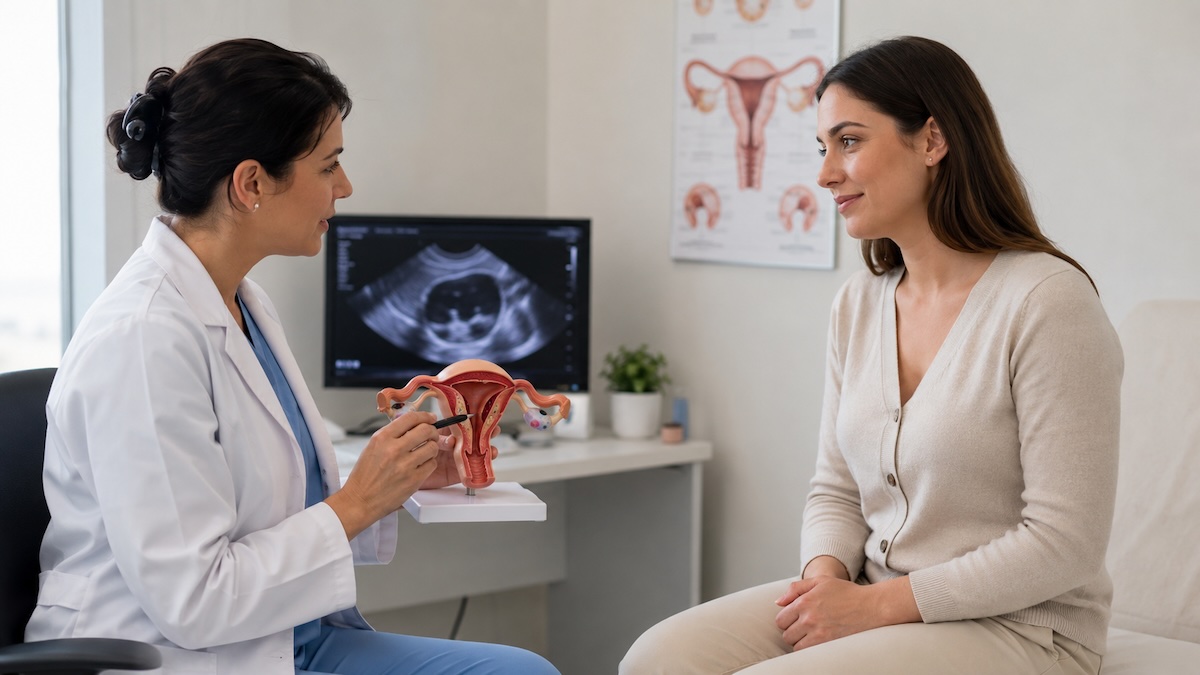
Unlike simple ovarian cysts, endometriomas form when grows on the ovary and repeatedly bleeds during menstrual cycles. Over time, the trapped blood accumulates and forms a cyst.
How Endometriomas Develop
The development of an endometrioma typically follows these steps:
- Endometrial-like tissue attaches to the ovary.
- During menstrual cycles, the tissue bleeds just like the uterine lining.
- Blood becomes trapped within the ovary.
- Over time, the trapped blood forms a cyst.
These cysts can vary in size and may grow larger if the underlying endometriosis continues to progress.
Why Endometriomas Are Clinically Important
Endometriomas can cause several complications, including:
- Chronic pelvic pain
- Ovarian damage
- Reduced fertility
- Adhesions (scar tissue)
Because of these potential effects, endometriomas often require careful monitoring and sometimes surgical treatment.
Endometriosis vs Endometrioma: Key Differences
Although the two conditions are related, they represent different aspects of the same disease.
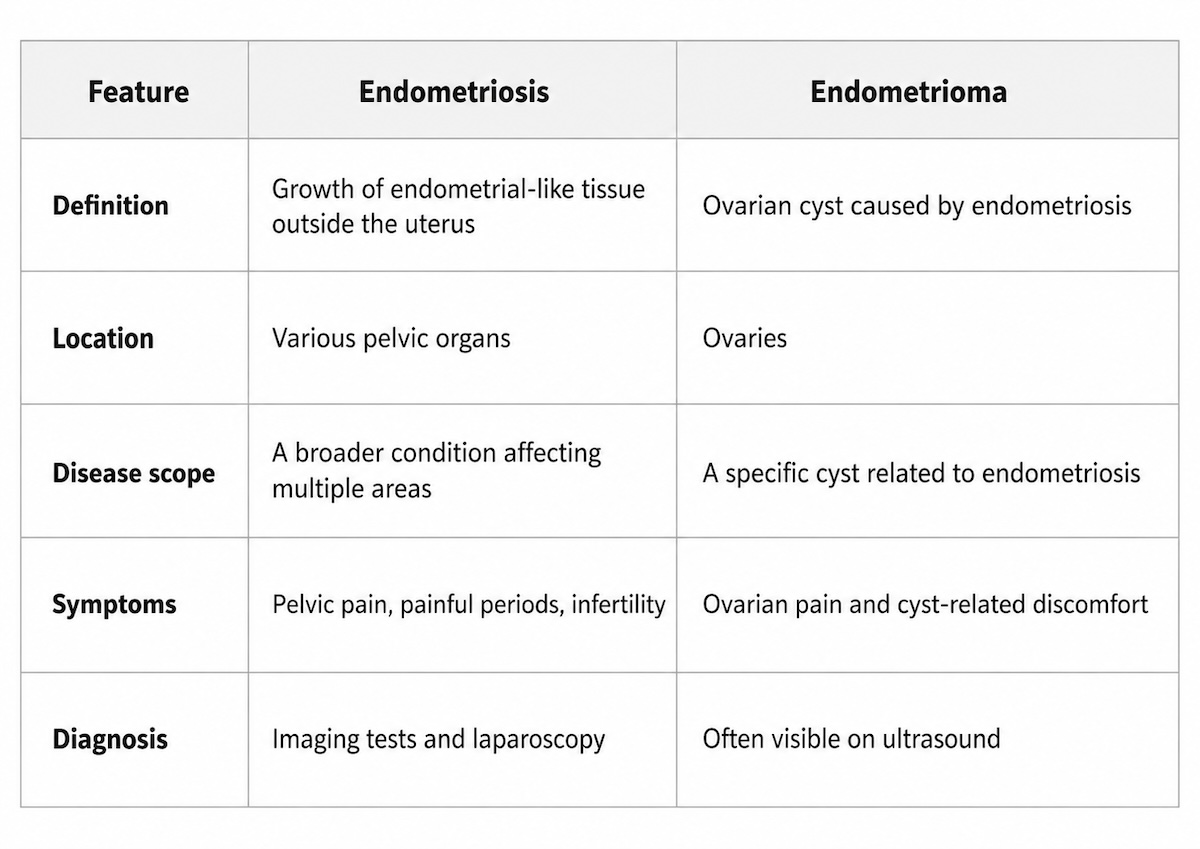
In simple terms, endometrioma is a complication of endometriosis, not a completely separate condition.
Not everyone with endometriosis develops an endometrioma, but when it occurs, it often indicates a more advanced stage of the disease.
Symptoms of Endometriosis
The symptoms of endometriosis can vary widely from person to person. Some women experience severe pain, while others may have mild symptoms or none at all.
Painful Periods
One of the most common symptoms is severe menstrual cramps. These cramps may begin before the menstrual cycle starts and continue for several days.
Unlike typical menstrual discomfort, the pain associated with endometriosis can become progressively worse over time.
Chronic Pelvic Pain
Many women with endometriosis experience persistent pelvic pain, even outside of their menstrual cycle. This pain may feel dull, sharp, or pressure-like.
Pain During Intercourse
Pain during or after sexual intercourse is another common symptom. This occurs because endometrial tissue may grow near structures involved during intercourse.
Painful Bowel Movements or Urination
Some individuals experience pain when using the bathroom, particularly during menstruation. This symptom may occur if endometriosis affects the bladder or bowel.
Infertility
Endometriosis is one of the leading causes of infertility. Scar tissue and inflammation in the reproductive organs can interfere with egg release, fertilization, or implantation.
Other Possible Symptoms
Additional symptoms may include:
- Fatigue
- Heavy menstrual bleeding
- Digestive problems such as bloating or nausea
Because these symptoms overlap with other conditions, diagnosis may sometimes take time.
Symptoms of Endometrioma
Endometriomas share many symptoms with endometriosis, but they may also cause additional issues related to ovarian cysts.
Ovarian Pain
Pain caused by an endometrioma is often localized to one side of the pelvis, depending on which ovary is affected.
Severe Menstrual Pain
Women with endometriomas frequently experience intense period pain, sometimes more severe than typical endometriosis symptoms.
Pain During Intercourse
Deep pelvic pain during intercourse can occur if the cyst presses on nearby tissues.
Difficulty Conceiving
Because endometriomas develop within the ovaries, they can affect ovarian function and reduce fertility.
Pelvic Pressure or Bloating
Larger cysts may cause a feeling of fullness or pressure in the lower abdomen.
Ruptured Endometrioma
In rare cases, an endometrioma can rupture. Symptoms may include:
- Sudden severe pelvic pain
- Nausea or vomiting
- Abdominal tenderness
A ruptured cyst may require urgent medical attention.
How Doctors Diagnose Endometriosis
Diagnosing endometriosis can be challenging because symptoms vary widely and may mimic other conditions.
Medical History and Symptom Review
Doctors usually begin by discussing symptoms such as:
- Menstrual pain
- Pelvic discomfort
- Fertility concerns
Understanding symptom patterns helps guide further testing.
Pelvic Examination
During a pelvic exam, a healthcare provider may feel for abnormalities such as cysts, nodules, or scar tissue.
Imaging Tests
Imaging tests can help identify signs of endometriosis.
Ultrasound is commonly used to detect ovarian cysts like endometriomas.
MRI scans may be recommended in more complex cases to evaluate deep endometriosis lesions.
Laparoscopy (Gold Standard Diagnosis)
The most definitive way to diagnose endometriosis is through laparoscopy, a minimally invasive surgical procedure.
During this procedure, a small camera is inserted through a tiny incision in the abdomen, allowing the doctor to directly view endometrial implants and confirm the diagnosis.
How Endometrioma Is Diagnosed
Endometriomas are usually easier to detect than other forms of endometriosis.
Pelvic Ultrasound
A pelvic ultrasound is often the first test used. Endometriomas typically have a characteristic appearance that helps doctors identify them.
MRI Scans
MRI imaging may be used if the cyst appears complex or if doctors need more detailed information.
Laparoscopy
In some cases, laparoscopy is performed both to confirm the diagnosis and to remove the cyst if necessary.
Can Endometriosis and Endometrioma Occur Together?
Yes, these conditions frequently occur together. In fact, endometriomas are often associated with moderate to severe endometriosis, typically classified as Stage III or Stage IV.
When both conditions are present, scar tissue and inflammation may affect the ovaries and surrounding reproductive organs.
Impact on Fertility
Endometriomas can influence fertility in several ways:
- Reduced ovarian reserve
- Damage to ovarian tissue
- Inflammation affecting egg quality
However, many women with endometriosis or endometrioma can still conceive with proper treatment and medical support.
When to See a Doctor
Many women assume that severe menstrual pain is normal. However, persistent or intense symptoms should not be ignored.
Warning Signs That Should Be Evaluated
You should consider speaking with a healthcare provider if you experience:
- Severe menstrual pain that disrupts daily activities
- Chronic pelvic pain
- Pain during intercourse
- Difficulty becoming pregnant
Importance of Early Diagnosis
Early diagnosis allows doctors to manage symptoms, prevent complications, and protect fertility whenever possible.
If you are experiencing symptoms of endometriosis or endometrioma, consulting a gynecologic specialist can help you receive the appropriate care and treatment plan.
Frequently Asked Questions
Is endometrioma the same as endometriosis?
No. Endometriosis is the broader condition involving endometrial-like tissue growing outside the uterus. Endometrioma is a type of ovarian cyst caused by endometriosis.
Is endometrioma dangerous?
Endometriomas are not usually life-threatening, but they can cause significant pain, ovarian damage, and fertility challenges if left untreated.
Can endometrioma go away on its own?
Unlike simple ovarian cysts, endometriomas rarely disappear on their own. They often require monitoring or treatment.
Does endometrioma always require surgery?
Not always. Some cases can be managed with medication or monitoring. However, surgery may be recommended if the cyst causes severe symptoms or fertility concerns.
Can you have endometriosis without endometrioma?
Yes. Many women with endometriosis never develop endometriomas. The cysts occur only when the ovaries are involved.
Conclusion
Endometriosis and endometrioma are closely related conditions, but they are not the same. Endometriosis refers to the growth of endometrial-like tissue outside the uterus, while endometrioma is a type of ovarian cyst that develops when this tissue affects the ovaries.
Both conditions can cause significant symptoms, including pelvic pain, painful periods, and fertility challenges. Because symptoms can vary widely, early diagnosis and proper medical evaluation are essential for effective management.
If you suspect you may have symptoms of endometriosis or endometrioma, seeking expert gynecologic care is an important step toward understanding your condition and exploring treatment options.
At Clinton Women’s Healthcare, our experienced physicians specialize in diagnosing and treating complex gynecologic conditions, including endometriosis and ovarian cysts. Using advanced diagnostic tools and minimally invasive surgical techniques, our team is committed to helping women find relief from symptoms while protecting their reproductive health.
If you are experiencing persistent pelvic pain or other concerning symptoms, the specialists at Clinton Women’s Healthcare are here to provide compassionate, personalized care and support throughout your health journey.